
Gordon Organization Insights and Articles
Welcome to Insights, your go-to resource for strategic financial guidance. Whether you’re a business owner, executive, or finance leader, this blog delivers practical expertise on corporate financial strategy, fractional CFO services, and navigating complex financial challenges. From cash flow management to growth planning, Insights equips you with the knowledge to make informed, confident decisions. Explore expert perspectives, industry trends, and actionable strategies designed to help your business thrive.

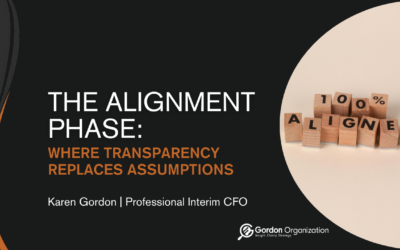
Phase 4 Alignment
Alignment is where plans either hold or start to break down. It is not about agreement. It is about replacing assumptions with shared understanding that actually guides decisions.
When definitions, priorities, and decision paths are clear, execution accelerates and friction drops. Without that transparency, even strong plans unravel and teams end up working at cross purposes.
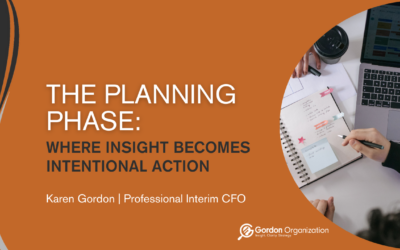
Phase 3 Planning
The Planning phase is where insight turns into deliberate action. It is not about creating a long list of tasks. It is about making clear decisions on what matters now, what can wait, and what should be left for the next leader.
Strong planning reflects real capacity, not wishful thinking. When done well, it aligns leadership, focuses execution, and creates momentum that carries forward beyond the interim period.
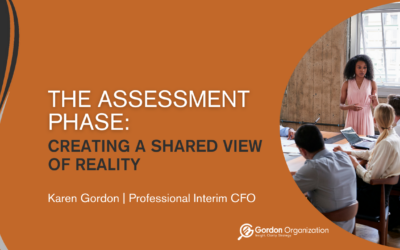
Phase 2 Assessment
The Assessment phase is where organizations get grounded in reality. It is not about pointing out problems. It is about building a shared, objective understanding of how the organization actually operates.
When leaders align on what is really happening across people, processes, and systems, decisions get clearer and momentum builds. Without that foundation, even the best plans are built on assumptions.
Phase 1 Engagement
The Engagement phase is where interim leadership either gains momentum or gets constrained from the start. Rushing to fill the seat often limits the value an interim leader can deliver.
Done well, this phase defines expectations, aligns on outcomes, and sets the tone for trust and authority. It is not about speed. It is about getting the foundation right so the work that follows actually sticks.
Interim Leadership (Part Two)
The second half of an interim engagement is where the impact becomes visible. Clarity turns into alignment, and alignment drives meaningful progress across the organization.
Done well, this work builds momentum, strengthens the finance function, and prepares the organization for a successful transition. The goal is not just to move through a leadership change, but to come out of it stronger, more focused, and ready for what’s next.
Interim Leadership (Part One)
Interim CFO work is often mistaken for speed, but the real value comes from structure. A disciplined, repeatable approach creates clarity, builds alignment, and sets the organization up for what comes next.
The strongest engagements don’t rely on urgency or personality. They follow a methodical process that turns insight into action and ensures the progress made during the interim period actually lasts.
CFO as Change Catalyst
In 2026, the CFO role continues to expand beyond reporting into something far more influential. The finance function touches every part of the business, which puts CFOs in a unique position to drive real change.
The shift is toward curiosity, partnership, and getting involved earlier. When finance helps shape decisions instead of explaining them after the fact, organizations move faster, make better choices, and operate with more confidence.
The Rise of the Professional Interim
In 2026, more organizations are going to rethink the rush to fill leadership roles and start prioritizing the right fit over immediate hires.
Professional Interims step in with a methodical approach, assessing where the organization is, defining what it actually needs, and guiding the transition forward. When done well, they don’t just keep things moving. They set the next leader and the organization up for long-term success.
Clarity is Currency
In 2026, the scarcest resource in finance is not time or money. It is attention. Where you direct it determines what actually moves forward.
Strong CFOs are getting disciplined about focus. They are cutting noise, challenging low-value work, and treating clarity like a capital allocation decision. When you do that, reports, meetings, and priorities start driving real progress instead of just activity.
From Chaos to Clarity
2025 exposed a hard truth. More data, faster systems, and constant activity do not create better decisions. Without clarity, they create noise.
Finance leaders were forced to get honest about what was not working and start focusing on what actually drives results. As we move into 2026, the shift is clear. It is no longer about reporting the past. It is about bringing insight, clarity, and strategy to shape what happens next.